
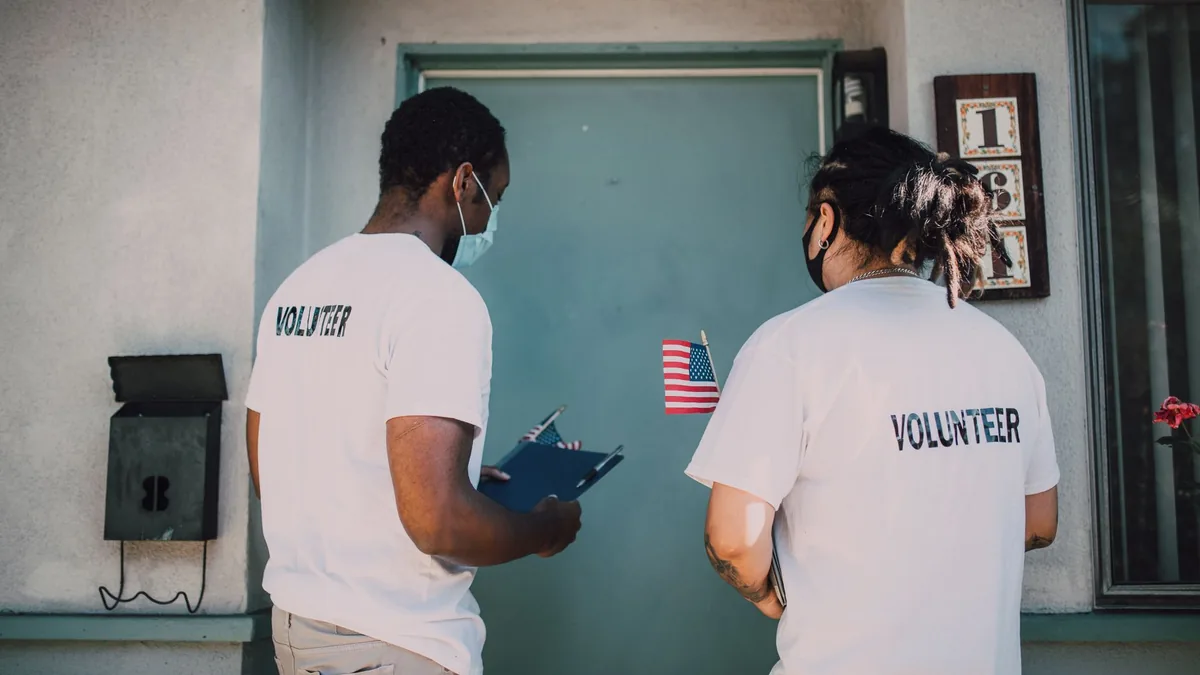
Seva, service without expectation of return, asks an organization to refuse four things: service that needs an audience, service conditioned on the recipient, service that is really a sales channel, and service that requires being thanked.
It is easy to take a word like seva as a mood. It is more useful as a constraint.
Seva is service performed without expectation of return — no credit, no exchange, no condition attached to the recipient. A sevadar is the person doing it. In the tradition the word comes from, the archetypal example is not heroic: it is washing dishes, cleaning shoes, cooking for strangers, sweeping a floor. The point of choosing those examples is that nobody watches you do them.
What does seva mean for an organization?
Applied to a person, seva is an attitude. Applied to an organization, it has to be converted into something with an edge, because organizations do not have attitudes — they have incentives, and the incentives will win every time the attitude is the only thing opposing them.
So the useful question is not “are we serving?” It is: what does this word forbid? Four things, as far as we can tell.
One: service that needs an audience
If the work only happens when it can be photographed, reported or counted toward something, it is not the thing. This is a live risk for every nonprofit, because the parts of the work that are legible to funders and the parts that matter are not the same parts.
It has a specific consequence here. A facility safety review that goes well is one where somebody walked the corridor nobody walks and found nothing worth reporting. That is a successful review and it produces no story. The review program.
Two: service conditioned on the recipient
Seva is not contingent on the recipient deserving it, being grateful for it, or being easy. A program that quietly works better for compliant, organized, articulate people has selected for the people who were going to be fine.
This is why care that requires an address, a phone and transport is not neutral. It is a filter, and it filters out exactly the people with the most to lose. Valor Medica.
Three: service that is really a sales channel
A charitable program that exists to generate referrals somewhere else is an acquisition cost with a mission statement attached. None of these four divisions exists to route business anywhere, and the boundaries that keep it that way are written down. Independence and boundaries.
Four: service that requires being thanked
Most of what these divisions do is invisible to the person it protects. A resident who does not fall does not know why. A patient whose therapy is monitored does not experience the monitoring as an event. That is the normal case, not a failure of communication.
What the constraint costs
These are not free positions. Refusing to build a fundraising apparatus caps what the organization can do. Refusing to publish findings makes it a worse advocate for its own work. Refusing to condition service on the recipient makes the work harder and the outcomes messier.
A value that has never been inconvenient is a slogan. These have each cost something already. Our values.
The verification test
There is a fifth rule that follows from the other four and is easier to check than any of them: say the checkable thing. Publish the EIN. Publish the date the exemption took effect. Publish the classification section. Name the document each claim comes from, and name the year a statistic describes rather than the year it was published.
An organization that makes verification easy is making a small, real commitment, and it is the one commitment a stranger can test in five minutes. The record.
Frequently asked questions
What does the word seva mean?
Seva is service performed without expectation of return. It carries no credit, no exchange and no condition attached to the person receiving it. A sevadar is the person doing that service. For an organization, the word is more useful as a constraint than as a mood, because it tells the organization what it must refuse to do.
What are examples of seva?
The classic examples are ordinary, not heroic: washing dishes, cleaning shoes, cooking for strangers and sweeping a floor. They were chosen because nobody watches you do them. For Sevadar Foundation, the same idea shows up in a facility safety review that goes well, where someone walks the corridor nobody walks, finds nothing worth reporting and produces no story.
What does seva forbid an organization to do?
Seva asks an organization to refuse four things: service that needs an audience, service that depends on the recipient deserving it or being grateful, service that is really a sales channel for referrals somewhere else, and service that requires being thanked. Each refusal has a cost, and the foundation names those costs rather than treating its values as free.
How can you check whether an organization means what it says?
Look for the checkable thing. An organization that means it publishes its EIN, the date its tax exemption took effect and its classification section. It names the document each claim comes from, and the year a statistic describes rather than the year it was published. Making verification easy is a small, real commitment that a stranger can test in five minutes.