
For people on long-term opioid therapy, structured assessment at intervals is the alternative to abrupt discontinuation, because it gives a clinician something other than one blunt lever: how much is prescribed. Nobody funds it, since monitoring is time and time is not a billable procedure.
This is an argument about funding, written by an organization that is not a medical provider and makes no clinical claims. Read it as economics.
What separates safe long-term opioid therapy from unsafe therapy?
Public argument about long-term opioid therapy has largely reduced to one variable: how much is prescribed. More or less. Up or down. Fifteen years of policy has been organized around moving that number in one direction.
There is a second variable, and it is the one that actually distinguishes safe therapy from unsafe therapy: whether anybody is watching. Structured assessment, at intervals, recorded so that this time can be compared with last time.
Why isn’t opioid monitoring done more often?
Not because it is controversial. Nobody has seriously argued that monitoring is a bad idea in twenty years.
It is because monitoring is time, and time is not a billable procedure. A practice that monitors well is absorbing a cost. A practice that does not is not penalized for the omission. Two rational actors, opposite behavior, and the difference is a line item that does not exist.
That is a textbook description of work a market will not do and an agency has not taken on — which is exactly the shape of gap a charitable organization is for. It is the second test we apply when choosing our work.
The population this leaves stranded
There is a group for whom opioid therapy is appropriate, for whom it is working, and for whom the practical alternative offered has often been abrupt discontinuation. Treating quantity as the only lever produces a second harmed population alongside the first.
This foundation does not litigate that clinically — it is not a medical provider, holds no clinical license, and makes no treatment claims. What it can say is that a program built on measurement gives a clinician something other than a blunt instrument, and that building the measurement is the part nobody pays for. See opioid safety as a foundation problem.
What does opioid monitoring involve?
- Delivery that is reliable, so variation in a patient’s course is not just them running out.
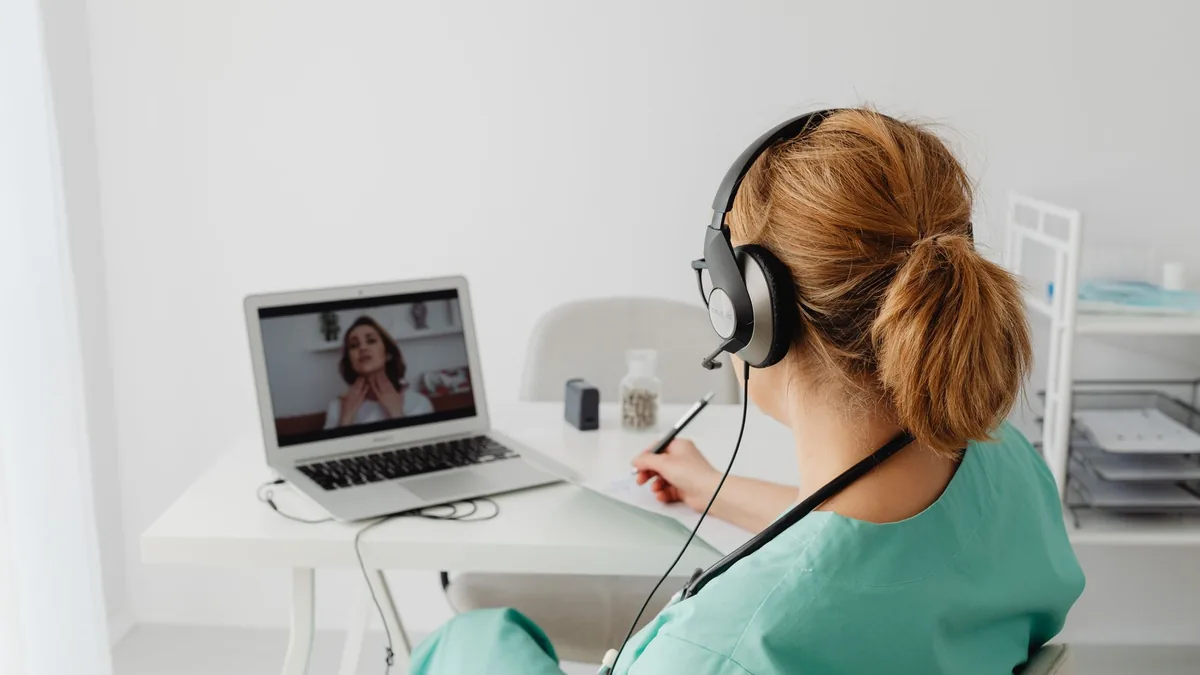
- Remote monitoring, so the interval between assessments is a decision rather than whatever it happened to be.
- Psychometrics — structured instruments, so what is recorded today can be compared to what was recorded before. If the only measure is how a visit felt, nothing can be compared and nothing can be shown to have improved.
The connection to the other divisions
All four of this foundation’s divisions are the same bet in different settings: that attention paid on a schedule, by someone competent, to something nobody is watching, is the highest-yield intervention available.
A building nobody walks. A patient nobody can find. A therapy nobody measures. A medication list nobody reviews. See one foundation, four divisions.
Frequently asked questions
What is the alternative to stopping opioids abruptly?
Structured monitoring. For people on long-term opioid therapy, assessment at set intervals, recorded so this visit can be compared with the last, gives a clinician something other than one blunt lever: how much is prescribed. Without it, the practical choice has often narrowed to abrupt discontinuation, even for people whose therapy is appropriate and working.
Who pays for opioid monitoring?
In practice, nobody. Monitoring is time, and time is not a billable procedure. A practice that monitors well absorbs the cost itself, and a practice that does not is not penalized for skipping it. That is work a market will not do and no agency has taken on, which is exactly the kind of gap a charitable organization is for.
Why use structured questionnaires in opioid monitoring?
Because they make visits comparable. Structured instruments, called psychometrics, record answers the same way each time, so what is recorded today can be set beside what was recorded before. If the only measure is how a visit felt, nothing can be compared and nothing can be shown to have improved.
Does Sevadar Foundation give opioid treatment advice?
No. Sevadar Foundation is not a medical provider, holds no clinical license, and makes no treatment claims. Its argument is about funding: a program built on measurement gives a clinician something other than a blunt instrument, and building that measurement is the part nobody pays for. The measurement work sits with IntellaRx.